
Data centres
Power, cooling, and the people who commission them.
A build programme runs from the first single-line diagram to the night the first customer load lands — and every phase needs a different specialist. We staff that whole arc across the Gulf, India and Singapore: design, construction, commissioning and the critical operations that follow handover.
- Design · Build · Commission · Operate
- Gulf & India mobilisation
- Level 1–5 commissioning
The thesis
Capital finds sites. It cannot find a commissioning manager.
Boards are not short of capital and developers are not short of land. What gates a hall now is the interconnection queue, the substation transformer order, the water allocation, and a thermal design that has to hold through a Gulf summer. Those items are settled years before a rack is racked, and each one is settled by a small number of people who have done it before.
In the Gulf the cooling decision is a water decision. Evaporative systems buy efficiency in the hottest hours and spend a resource the region prices carefully, so operators weigh air-cooled chillers, closed-loop circuits and thermal storage against a water use commitment as seriously as an energy one. Getting that trade right takes mechanical engineers who have run the ASHRAE envelope against real desert load profiles, not a template imported from a temperate climate.
India's build has its own shape. Capacity clusters where fibre already lands and where power can be wheeled — Mumbai and Navi Mumbai, Chennai, Hyderabad, Pune, the Noida corridor — and operators there are moving from a colocation standard to a concurrently maintainable one, because anchor tenants now write Tier III language into the contract. That shift is not really a design problem. It is a commissioning and operations discipline problem.
Which brings the argument to the part nobody puts in the investment memo. A hall can be designed by a global consultancy and built by a capable contractor and still fail its integrated systems test, because the people who prove a facility — and the people who then run it at three in the morning — are a different and scarcer profession. That profession is what we recruit, validate, mobilise and place.
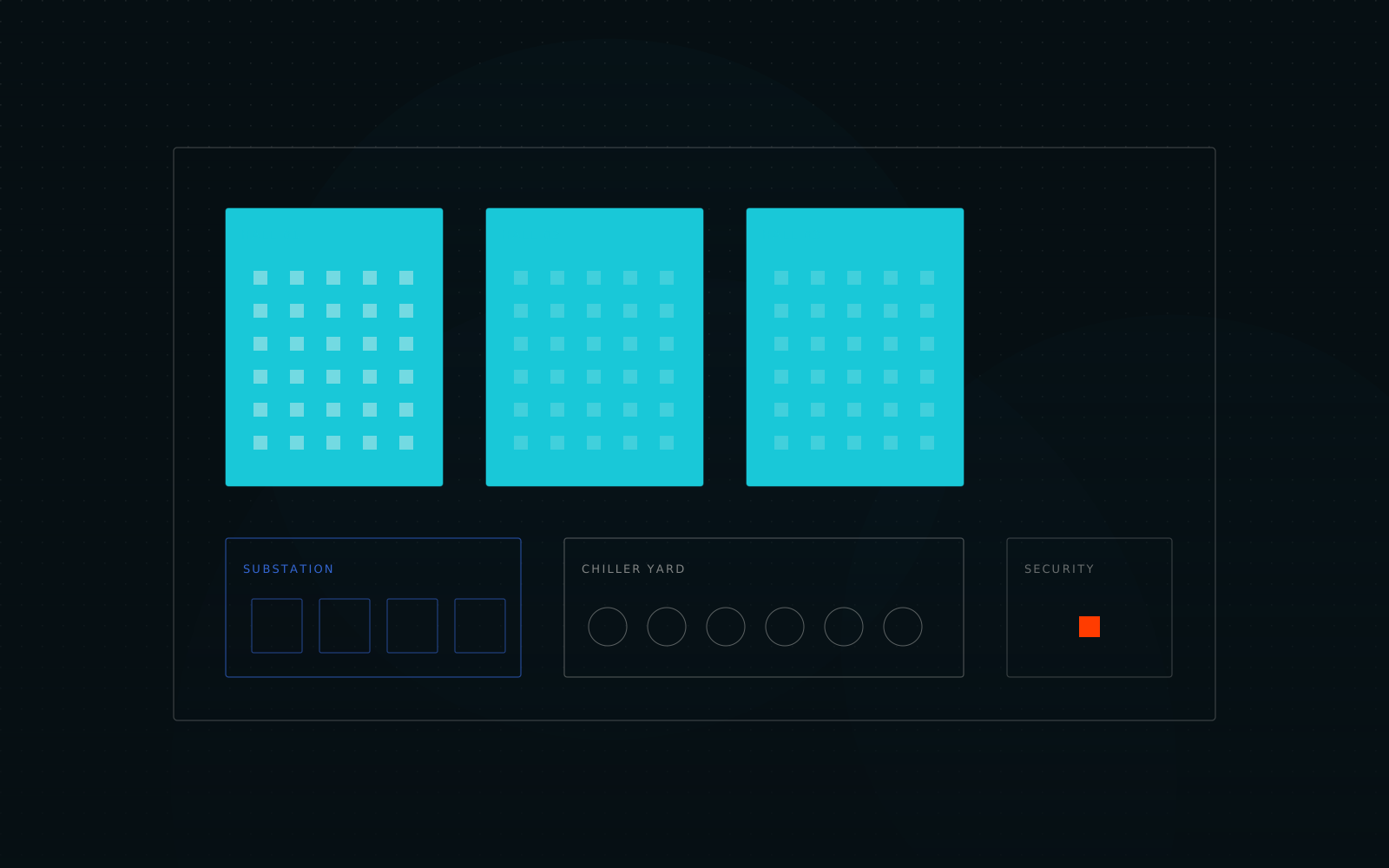
The Gulf and India are building for different reasons — sovereign cloud and national digital agendas on one side, corridor economics and cable landings on the other — and each reason changes which specialists a programme needs first.
What is driving demand
Six forces, and the people each one makes scarce.
Every driver below changes the design. What matters commercially is that each also changes who you need on site — and most of them point at the same short list of professions.
- 01
AI density
Racks specified for accelerated compute no longer sit inside the air-cooled envelope most halls were designed around. Direct-to-chip loops, rear-door heat exchangers and coolant distribution units bring a facility water system, secondary fluid chemistry and leak detection into a room that previously needed only airflow management. It is a different engineering discipline sharing the same floor.
Talent consequencemechanical engineers who have run a liquid loop, not only a CRAH fleet
- 02
Power before ground
Interconnection agreements, substation works and switchgear lead times now set the programme date more often than construction does. Sites are chosen for what the grid can deliver and when, and developers increasingly negotiate their own generation, storage or bilateral supply alongside the utility connection. The critical path moved upstream, into a conversation most delivery teams are not staffed for.
Talent consequenceHV engineers and planners who can hold a utility conversation and a schedule at once
- 03
Water as a design input
Across the Gulf, evaporative cooling buys efficiency in exactly the hours that matter most and spends a resource that is both scarce and politically visible. Operators are choosing air-cooled and closed-loop plant and accepting the electrical consequence, because a water use commitment is now scrutinised alongside the energy one. In India the same argument arrives through state water authorities and local consent conditions.
Talent consequencethermal specialists who can defend the trade-off to a regulator, not only to a client
- 04
Sovereign by requirement
Data residency rules, national cloud programmes and regulated sectors are pulling workloads in country rather than to the nearest region. That produces facilities built to hyperscale standards in markets that have never operated one, frequently with local content and nationalisation commitments written into the same contract. The standard is global; the workforce has to become local.
Talent consequencecrews that deliver to a global standard while training the local team behind them
- 05
Efficiency you have to evidence
Efficiency has moved from a design claim to a reported figure. Meeting a PUE or a WUE commitment means metering that was designed in, an EPMS that reports it credibly, and someone who can explain a seasonal curve to an auditor without flinching. Retrofitting measurement after handover is expensive and rarely convincing.
Talent consequenceenergy engineers engaged at design stage, not at reporting stage
- 06
The handover cliff
Construction teams are mobilised, funded, and then demobilised. Operations teams have to exist from the day the first customer load lands and keep existing for the life of the facility — on shift, at night, through every planned maintenance window. Across the Gulf and India that population is thin, because until recently there were few facilities at this specification to train it.
Talent consequencecritical facilities technicians recruited and inducted before practical completion
The lifecycle
Four phases, four different professions.
The mistake that costs programmes time is assuming the team that built the hall can prove it, and that the team that proved it will stay to run it. They are three different careers.
- 01
Design
The decisions that set the ceiling — resilience class, cooling medium, topology, and how much future load the shell and the incoming supply can actually carry. Almost everything expensive later is decided, or missed, here.
We staff
- Electrical (HV/MV) systems engineer
- Mechanical and liquid cooling engineer
- Sustainability and energy engineer
- MEP and CSA coordination lead
- Commissioning manager (design review)
- Structured cabling and fibre lead
Cooling and electrical designed to today's rack density, with no route to the liquid-cooled load the anchor tenant brings at the next fit-out.
- 02
Build
Procurement, construction and fit-out, where the design meets long-lead equipment and a site full of trades who all want the same ceiling void. The programme lives or dies on coordination and on the discipline of the records being kept.
We staff
- MEP and CSA coordination lead
- Project controls and planning lead
- QA/QC engineer
- HSE lead
- Structured cabling and fibre lead
- Electrical (HV/MV) systems engineer
Switchgear, transformers or chiller plant slip their delivery dates and every commissioning window behind them compresses into one.
- 03
Commission
Level 1 through Level 5 — factory witness, site acceptance, pre-functional checks, functional performance, and finally integrated systems testing under load with failures induced on purpose. This is the phase where a building becomes a data centre.
We staff
- Commissioning manager
- Commissioning engineer (Level 4-5, electrical)
- BMS and EPMS controls engineer
- Mechanical and liquid cooling engineer
- QA/QC engineer
- Critical facilities technician
Commissioning is run as a sign-off exercise rather than a test campaign, and the first genuine failure mode is discovered by a customer.
- 04
Operate
Live load, a maintenance regime, and a team that has to keep concurrent maintainability true every time a component is taken out of service. Capacity planning starts on day one, not when the floor is full.
We staff
- Critical facilities technician
- BMS and EPMS controls engineer
- DCIM and capacity planner
- Network and interconnection (DCI) engineer
- Sustainability and energy engineer
- Commissioning manager (recommissioning)
The build team leaves with the knowledge, and the operations team learns the plant from a drawing set instead of from the people who tested it.
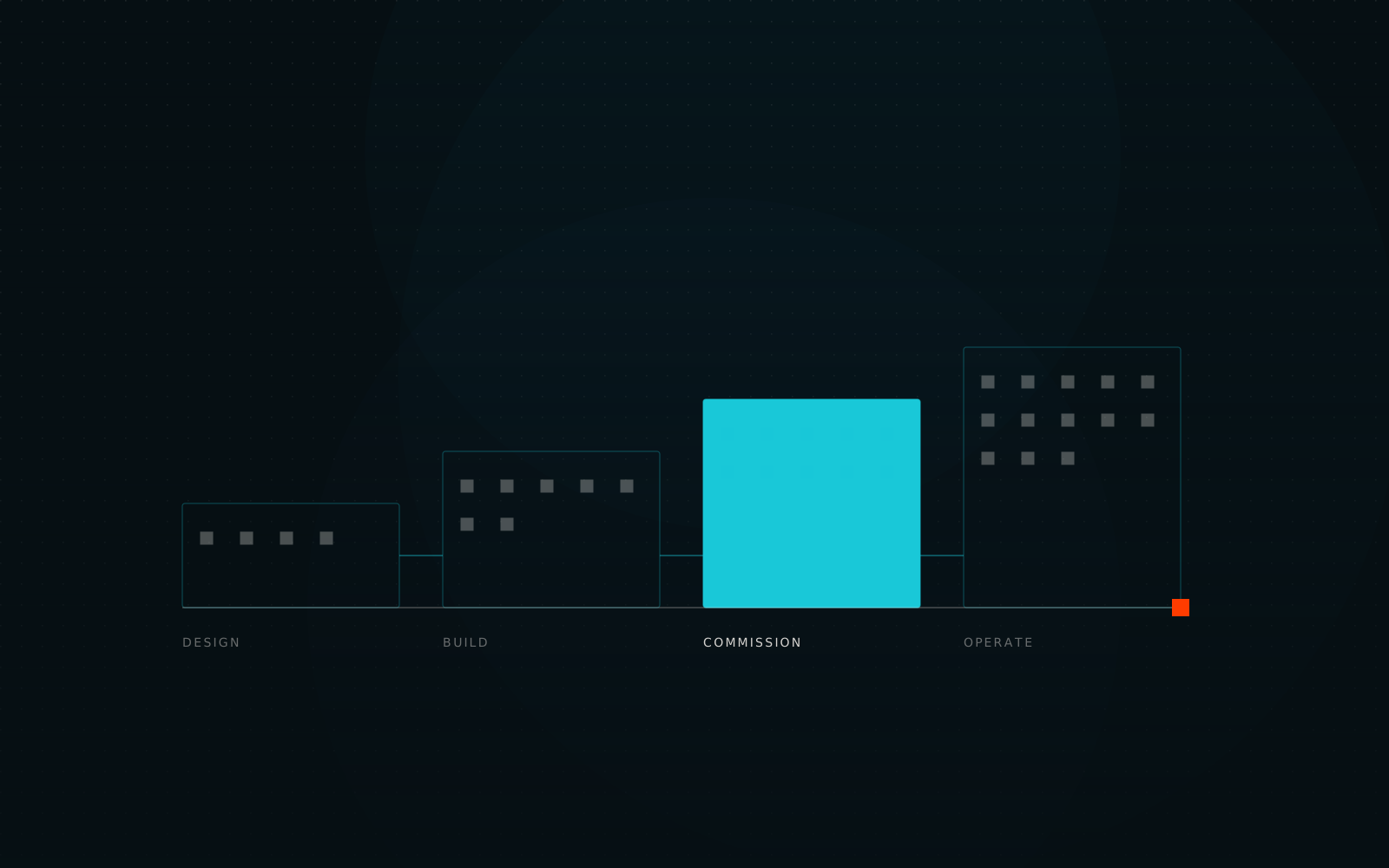
Design, Build, Commission, Operate. Demand is not flat across them: the hardest roles to find cluster towards the right-hand end, which is also where a programme has the least schedule left to absorb a gap.
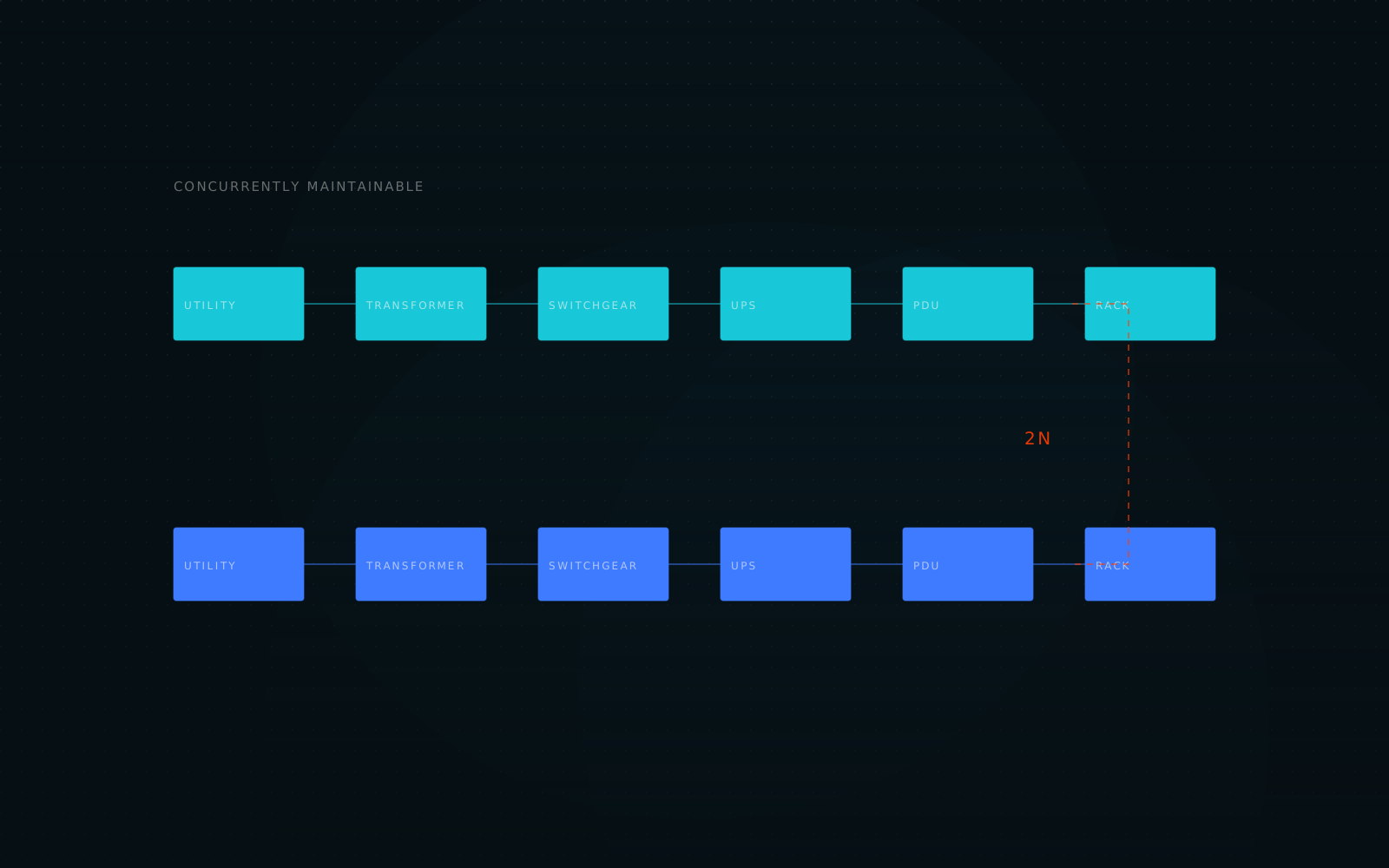
N+1, 2N, block redundant, distributed redundant. The class chosen at design decides what concurrent maintainability means in practice, and therefore what the operations team must be able to switch without dropping load.
Roles we staff
The professions a programme cannot substitute.
Grouped by the phase they belong to. Several appear on every programme and are hired late on most of them, which is usually the reason a date moves.
Design
3 rolesElectrical (HV/MV) systems engineer
Owns the electrical distribution from the incoming supply to the rack PDU, and the resilience class it has to hold under fault.
- HV/MV switchgear and transformer specification
- 2N, N+1, block and distributed redundant topologies
- Short-circuit, load flow and arc flash studies
- Protection grading and relay settings
- Generator, fuel and paralleling systems
- Utility interconnection interface
Mechanical and liquid cooling engineer
Owns the thermal design and the transition from air-cooled halls to direct-to-chip and rear-door heat rejection.
- Chilled water and air-cooled chiller plant
- Direct-to-chip loops, CDUs and secondary fluids
- Rear-door heat exchangers and containment strategy
- ASHRAE thermal guidelines and liquid cooling classes
- CFD modelling and airflow management
- Leak detection and fluid chemistry control
Sustainability and energy engineer
Makes the efficiency and water commitments provable rather than aspirational, from metering strategy through to the audit file.
- PUE and WUE measurement design
- Metering hierarchy and EPMS points strategy
- Energy modelling against local climate data
- Free cooling and heat reuse assessment
- Refrigerant selection and leakage control
- Reporting frameworks and audit evidence
Build
5 rolesMEP and CSA coordination lead
Stops the mechanical, electrical, plumbing and civil, structural and architectural packages from colliding in the same ceiling void.
- BIM model federation and clash detection
- Builder's work, penetrations and fire stopping
- Containment routing and services coordination
- Interface registers between packages
- Setting out and white space fit-out sequencing
- Design change control
Structured cabling and fibre lead
Owns the physical layer — the containment, trunks, terminations and records the network will live on for a decade.
- TIA-942 and ISO/IEC 11801 practice
- OM4 and OS2 MPO trunking
- Meet-me room and cross-connect build
- OTDR and insertion loss testing
- Labelling schemes and as-built records
- Pathway, tray and containment design
Project controls and planning lead
Holds the programme, the long-lead register and the honest version of the critical path.
- Primavera P6 and schedule integration
- Long-lead equipment and procurement tracking
- Earned value and progress measurement
- Interface and milestone management
- Change, variation and claims control
- Commissioning windows inside the master schedule
QA/QC engineer
Proves the installation matches the specification before commissioning discovers that it does not.
- Inspection and test plans
- Witness and hold point management
- Non-conformance reporting and close-out
- Factory acceptance test attendance
- Material and equipment verification
- Turnover package assembly
HSE lead
Runs the safety regime on a live site where energised systems and construction trades share the same floor.
- Permit to work and lock-out tag-out systems
- NFPA 70E electrical safety practice
- Confined space and work at height controls
- Site inductions and contractor onboarding
- Incident investigation and reporting
- Client and authority HSE compliance
Commission
3 rolesCommissioning manager
Owns the commissioning strategy end to end and holds the authority to say a system is not yet proven.
- Level 1-5 commissioning strategy and scripts
- Integrated systems testing and witness management
- Load bank campaign planning and step loading
- Failure mode and black building testing
- Tier certification demonstrations
- Turnover, O&M and as-tested documentation
Commissioning engineer (Level 4-5, electrical)
Runs functional and integrated testing across the electrical topology, including the failures you have to induce on purpose.
- Functional performance testing
- Integrated systems testing under load
- UPS, STS and generator sequencing verification
- Protection coordination and trip testing
- Load bank rigging and thermal soak
- Witness packs and as-tested records
BMS and EPMS controls engineer
Makes the building tell the truth — sequences, alarms, graphics and the data the operations team will act on at night.
- Sequence of operations and point-to-point checks
- EPMS and power quality monitoring integration
- BACnet, Modbus and SNMP integration
- Alarm rationalisation and priority schemes
- Graphics, trending and reporting
- Controls witness testing and tuning
Operate
3 rolesCritical facilities technician
Runs the plant on shift and is the person physically present when an alarm turns into an event.
- MOP, SOP and EOP execution
- Switching and isolation under permit
- UPS, generator and chiller operation
- Planned preventive maintenance routines
- Vendor escort and works supervision
- Incident response and escalation
DCIM and capacity planner
Knows what power, cooling and space are genuinely available before anyone commits them to a customer.
- DCIM asset and capacity modelling
- Branch circuit and rack-level monitoring
- Power and cooling reservation logic
- Move, add and change control
- Space, weight and containment planning
- CMMS integration and work order flow
Network and interconnection (DCI) engineer
Owns the fabric inside the hall and the paths out of it, including the routes to peering points and cable landings.
- EVPN-VXLAN and leaf-spine fabrics
- BGP peering, transit and route policy
- DWDM and dark fibre data centre interconnect
- Meet-me room and cross-connect operations
- Out-of-band and console infrastructure
- Capacity and latency path planning
What our specialists do
Six things we are asked to be certain about.
A CV can claim any of these. What follows is the level of detail our technical validation actually goes to before anyone is put forward.
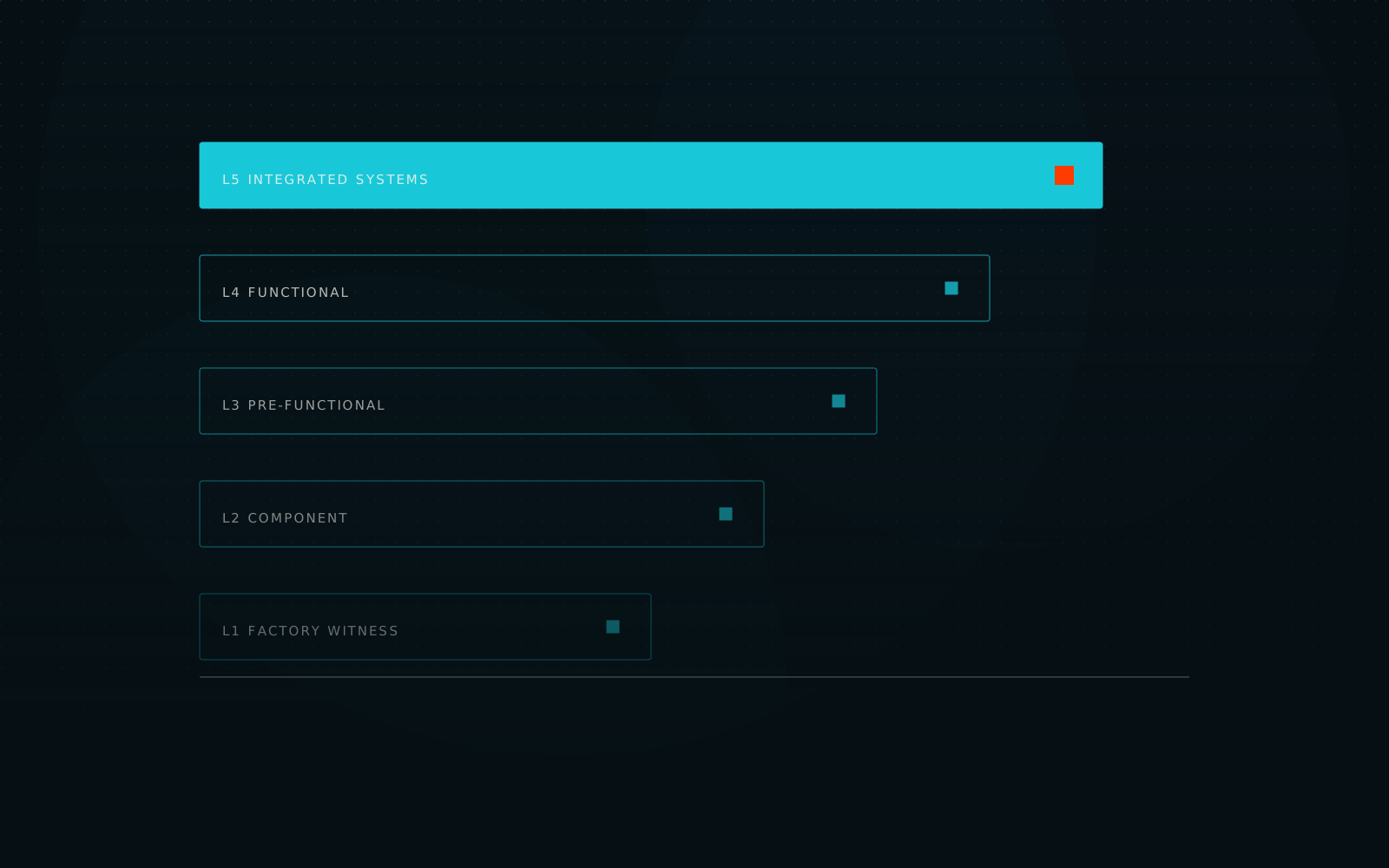
Level 1 factory witness through to Level 5 integrated systems testing under load, with failures induced deliberately. Each rung carries its own evidence, and skipping one is discovered at the rung above — or by a customer.
- 01
Integrated systems testing and commissioning
The specialists we place run commissioning as a test campaign, not a paperwork exercise — scripting each level, witnessing it, and inducing the failures a facility must survive. They arrive able to argue with a vendor about a result rather than record it.
- Level 1-5 scripts, from factory witness to integrated systems testing
- Load bank campaigns, step loading and thermal soak
- Black building and utility failure scenarios
- Pre-functional checklists and functional performance testing
- Tier certification demonstrations and evidence packs
- Turnover, as-tested records and O&M handover files
- 02
Electrical distribution and resilience
From the utility interface through switchgear, UPS and busway to the rack PDU, with the redundancy class treated as a behaviour to be proved rather than a label on a drawing. The people we place can explain what concurrent maintainability actually means on their topology.
- HV/MV switchgear, transformers and protection grading
- 2N, N+1, block redundant and distributed redundant topologies
- Static and rotary UPS, STS and busway distribution
- Generator plant, paralleling and fuel systems
- Short-circuit, load flow and arc flash studies
- Selective coordination and fault discrimination verification
- 03
Thermal and liquid cooling
Air-cooled halls, hybrid halls and the loops behind direct-to-chip and rear-door heat rejection, designed for climates that punish a temperate assumption. Water strategy is treated as a design constraint from the first sketch, not a sustainability footnote at the end.
- Chilled water, air-cooled and adiabatic plant selection
- Direct-to-chip loops, CDUs, TCS and FWS interfaces
- Rear-door heat exchangers and immersion pilots
- ASHRAE thermal guidelines and liquid cooling classes
- CFD modelling, containment and airflow management
- Water treatment, fluid chemistry and leak detection
- 04
Controls, monitoring and DCIM
The layer that decides whether an operations team sees a problem forming or hears about it from a customer. Our controls specialists commission sequences and alarms properly, then make the resulting data usable by the people on shift.
- BMS sequences of operation and point-to-point verification
- EPMS, power quality and branch circuit monitoring
- BACnet, Modbus and SNMP integration
- Alarm rationalisation, priorities and suppression logic
- DCIM asset, capacity and reservation modelling
- CMMS integration and maintenance work order flow
- 05
Network, fibre and interconnection
The physical layer and the fabric on top of it, including the paths that leave the building — meet-me rooms, carrier diversity, and the backhaul to cable landing stations. Records and labelling are treated as deliverables, because the next decade of operations depends on them.
- TIA-942 and ISO/IEC 11801 structured cabling practice
- OM4 and OS2 MPO trunking, OTDR and loss testing
- Meet-me room, cross-connect and carrier onboarding
- EVPN-VXLAN leaf-spine fabrics and BGP policy
- DWDM and dark fibre interconnect between sites
- As-built documentation, labelling and port records
- 06
Critical operations and maintenance
The regime that keeps a proven facility proven — written procedures, disciplined switching, and shift teams who have worked to those procedures somewhere else first. We staff operations before handover so the team learns the plant while it is still being tested.
- MOP, SOP and EOP authoring and execution
- Permit to work, lock-out tag-out and switching discipline
- Planned preventive maintenance schedules and vendor witnessing
- Shift rostering and escalation structures
- Capacity, change and move-add-change management
- Incident review and recommissioning after modification
Market by market
Same equipment. Entirely different constraints.
Where the capacity is going, why, and the specific thing that is hard to hire in each place.
Saudi Arabia
National digital and sovereign cloud programmes are pulling regulated workloads in country, and the industrial and giga-project agenda is adding compute demand that did not exist a decade ago. Sites are being selected against grid availability and generation strategy as much as against land.
The constraint
The build ambition has arrived faster than the domestic pool of commissioning, HV and critical operations specialists, so programmes import experience while training the local team that will inherit the facility.
- Riyadh
- Jeddah
- Eastern Province
- NEOM
United Arab Emirates
An early and unusually deliberate national AI agenda, combined with sovereign cloud requirements and dense subsea landing infrastructure, keeps both hyperscale and colocation build active. Operators here are among the first in the region to specify halls for liquid-cooled load rather than retrofit for it.
The constraint
Liquid cooling, controls and integrated systems testing experience is competed for by several concurrent programmes in the same emirate, which makes mobilisation timing as decisive as the shortlist.
- Dubai
- Abu Dhabi
- Fujairah
- Sharjah
Qatar and Oman
Both are building for sovereignty and for position: in-country cloud regions and government workloads in Qatar, and in Oman a combination of cable landings, free-zone economics and a genuinely attractive renewable power picture. Neither market is trying to be the largest; both are trying to be the most useful.
The constraint
Smaller domestic markets mean specialist crews are mobilised rather than resident, so right-to-work sequencing and rotation planning decide whether a commissioning window holds.
- Doha
- Ras Bufontas
- Muscat
- Salalah
India
Capacity is concentrating along corridors where cable landings, power availability and state incentives line up, with hyperscalers, domestic operators and captive builds competing for the same sites. Data protection rules and enterprise migration are pushing standards from a colocation baseline towards concurrently maintainable design.
The constraint
The construction market is deep, but the population that has commissioned and then operated a facility to that standard is far narrower than the volume of building suggests.
- Navi Mumbai
- Chennai
- Hyderabad
- Noida
Singapore
Constrained land and a deliberate, sustainability-gated approach to new capacity have turned Singapore into the region's governance and interconnection centre rather than its volume market. Regional standards, design authority and peering density are set here even when the halls are built elsewhere.
The constraint
Demand skews to senior, standards-setting roles — design authority, commissioning authority, regional operations governance — where the pool is small and rarely on the open market.
- Jurong
- Loyang
- Tai Seng
- Paya Lebar
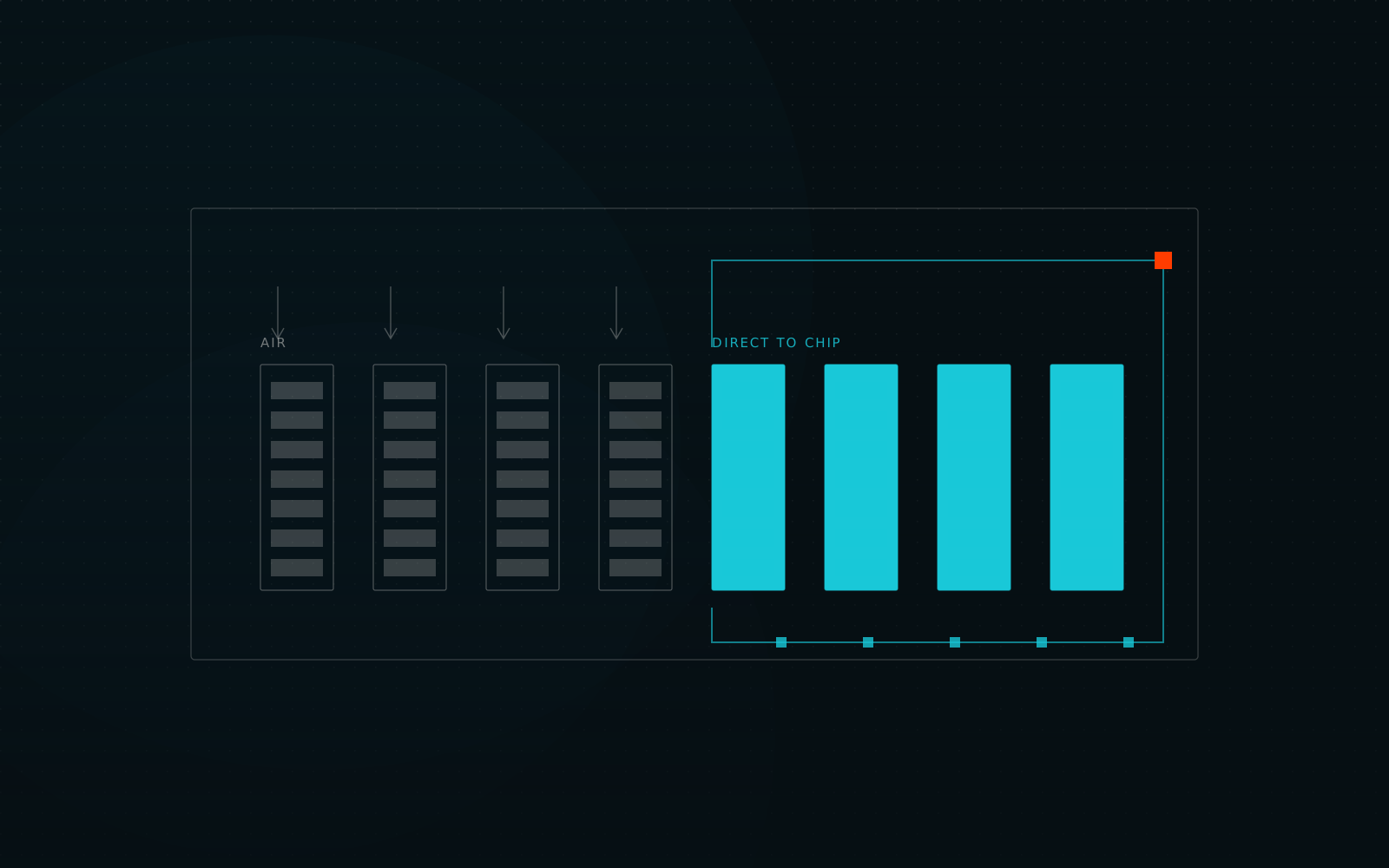
The transition is not a swap. Facility water, coolant distribution units, secondary loop chemistry and leak detection arrive alongside the air systems, and halls are increasingly designed to run both at once for years.
Handover is where a programme's attention drops and a facility's risk peaks. Shift rosters, maintenance regimes, DCIM baselines and the people who witnessed the testing are what carry a hall through its first year.
Mobilisation
How a crew actually gets on site.
Finding the person is the part everyone talks about. Getting them through sponsorship, attestation, induction and a contractor pass, on the date the programme needs them, is the part that decides whether the phase holds.
- 01
Scope the phase and the standard
We start from where the programme actually is — design review, fit-out, a commissioning campaign, or a handover into operations. The phase sets the standard a specialist must have worked to, and it decides whether you need one person or a formed crew.
- 02
Match on the phase they have done
Someone who has built halls is not automatically someone who has proved one. We shortlist against the specific phase, topology and cooling medium a person has worked on, and we say plainly when the market will not supply a profile on the timeline in front of you.
- 03
Validated by someone who has commissioned
Technical validation is run by practitioners, not by keyword match. For commissioning, controls and HV roles that means being questioned by someone who has signed results on a live topology, and who knows within a few minutes what a real answer sounds like.
- 04
Sponsorship, mobilisation and site access
Right to work is confirmed by role type before names go forward. Sponsorship, attestation, medicals, contractor passes, project inductions and current safety certification run in parallel with interviews across Saudi Arabia, the UAE and the wider Gulf — and arrivals are staged so the first specialists are productive while the rest clear.
- 05
On site, and documented on the way out
Someone on our side stays accountable while the crew is deployed: timesheets, extensions, rotations, replacements, and the interface with the main contractor. When the phase closes, the handover documentation closes with it, so the knowledge stays on the programme instead of leaving with the person.
FAQ
Questions programme directors ask first.
Tell us the phase and the standard.
A design review, a fit-out, a commissioning campaign, or the operations team you intend to keep. We will tell you what the market can supply on your timeline — and, just as usefully, what it cannot.